
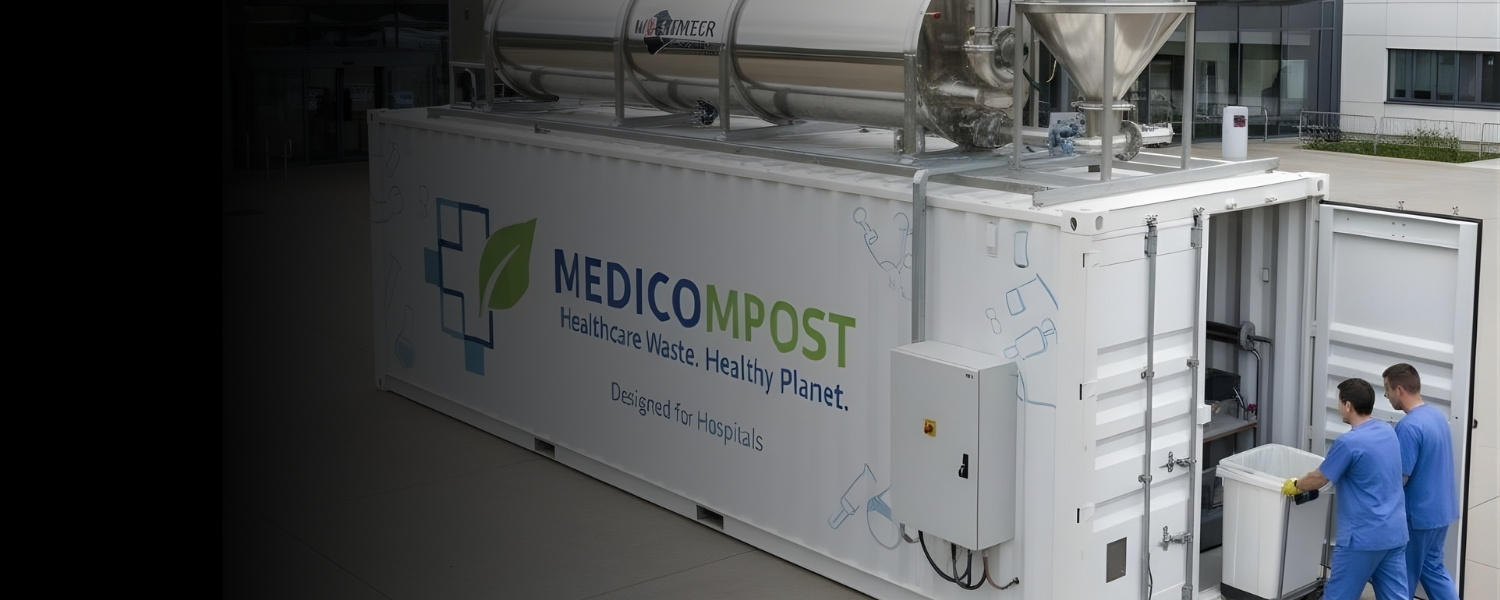
HospItals and Healthcare Facılıtıes
Hospitals may require controlled composting systems for cafeteria waste, staff dining waste, landscaping residues, and certain limited organic medical waste fractions permitted by regulations. In such facilities, hygiene, odor control, and traceability are critical operational parameters.
Implementation Notes
1
Enclosed in-vessel reactors are installed to minimize exposure to outdoor conditions.
2
Key process parameters (temperature, retention time, etc.) are recorded and made available for reporting when required.
3
Compost is utilized only for appropriate and approved applications, determined on a project-specific basis.
4
System design is carried out in accordance with local healthcare and waste management regulations.
Case Study 1
Cafeteria Waste & Odor Issues in a City Hospital
A regional city hospital was serving meals daily to approximately 2,000 patients and staff. Cafeteria waste was collected in open containers behind the building, creating significant hygiene issues—especially in summer—due to strong odors and frequent cat/bird intrusion. During inspections, this area repeatedly received “needs improvement” notes.
Solution:
A fully enclosed in-vessel composting reactor was installed at the end of the waste collection line. Cafeteria waste was fed into the reactor after pre-sorting and short holding. The system automatically recorded temperature and retention-time data, making all process parameters traceable and reportable.
Results:
- Odor and animal-related hygiene problems were completely eliminated
- The composting system was recorded as a “best practice” during inspections
- The compost produced was used in the hospital’s green areas, and the management highlighted this project as an example of sustainability in the annual activity report
Case Study 2
Compost for a Therapeutic Garden in a Private Hospital
A private oncology hospital wanted to establish a therapeutic garden for patients and their families. However, imported compost required for the landscaping was costly and offered little sustainability value. At the same time, organic waste from the hospital cafeteria was not being utilized in any way.
Solution:
A low-noise container-type composting unit was installed in the technical service area. Cafeteria waste and garden pruning residues were mixed and composted inside the enclosed system, fully meeting hygiene and traceability requirements.
Results:
- All compost used in the therapeutic garden was produced entirely from the hospital’s own waste
- Landscaping input costs were significantly reduced
- With its “healing garden that returns its waste back to the soil” story, the hospital gained strong prestige in national media and corporate social responsibility reports