
Industrıal Food Processıng Facılıtıes
In industrial food facilities such as fruit–vegetable processing plants, ready-meal producers, and meat and dairy operations, large volumes of organic by-products and waste are generated. These facilities typically focus on a specific product type, which makes waste streams more homogeneous.
Implementation Notes
1
Depending on waste characteristics, integrated solutions are developed using pre-shredding, dewatering, or mixing units.
2
Process parameters are adjusted according to the product type and the targeted compost quality.
3
When appropriate, compost can be supplied back to contracted growers as a soil amendment.
Case Study 1
Utilizing Peels and Pulp in a Fruit Juice Factory
A fruit juice factory was generating tons of peel, pulp, and rejected products during peak season. These materials were either given away as low-value animal feed or sent for disposal at a cost. Most of the organic material was leaving the facility without gaining any value.
Solution:
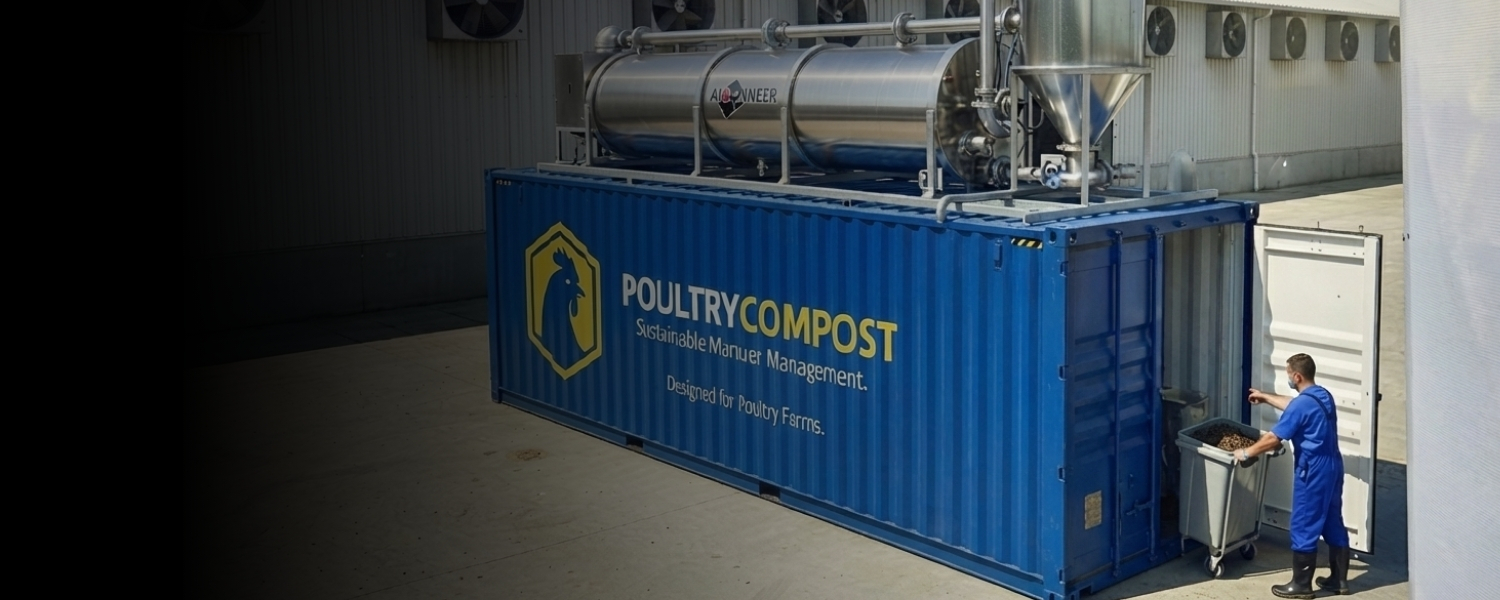
A 40’ containerized in-vessel composting reactor, integrated with a crusher and mixer, was installed on-site. Peels and pulp were composted in the reactor, combined with other plant-based residues when needed. The automation system optimized process parameters based on the type of fruit being processed.
Results:
- Instead of disposal, the factory began producing value-added compost
- Compost was supplied to nearby contracted growers, creating a positive impact across the supply chain
- The company’s sustainability narrative strengthened, and the project became an influential factor in presentations to retail chains
Case Study 2
Reducing Organic Load in a Ready-Meal Production Facility
An industrial kitchen producing thousands of portions daily was generating significant organic waste: production scraps, returned meals, and fruit–vegetable trimming residues. Some waste, including unpackaged returned products, was being disposed of directly, resulting in both high costs and weak environmental performance.
Solution:
A container-type composting unit was installed behind the facility.
The reactor accepted:
- Production scraps and returned meals
- Fruit and vegetable residues
After pre-shredding when required. The system operated in semi-batch mode aligned with the facility’s shift schedule.
Results:
- Organic waste disposal costs were significantly reduced
- The facility gained the ability to present a “near-zero organic waste” approach to its customers with a concrete implementation
- During food safety and environmental audits, the system reinforced the company’s image as a responsible producer