
Farms and AgrIcultural Enterprıses
In farms, the primary organic waste sources include animal manure, feed residues, bedding material, and plant-based residues (mowing, pruning, etc.). Both waste management and the recovery of fertilizer/bedding materials are operational priorities.
Implementation Notes
1
When needed, solid–liquid separation is performed with a screw press separator, and the solid fraction is fed into the reactor.
2
Alongside manure, feed residues and plant-based waste are homogenized in mixing tanks to achieve a balanced process input.
3
The resulting compost can be used as a soil amendment on fields, pastures, or forage crop lands.
4
With the right configuration, the same reactor can also be used for producing hygienic bedding material in specific projects.
5
Process parameters (temperature, retention time, etc.) are recorded and can be reported when required.
Case Study 1
Manure and Bedding Management in a Dairy Farm
On a 500-head dairy farm, barn manure, bedding material, and feed residues were stored together; open lagoons and piles caused severe odor, flies, and complaints from neighboring properties. Additionally, the cost of chemical fertilizers used on the fields had been rising.
Solution:
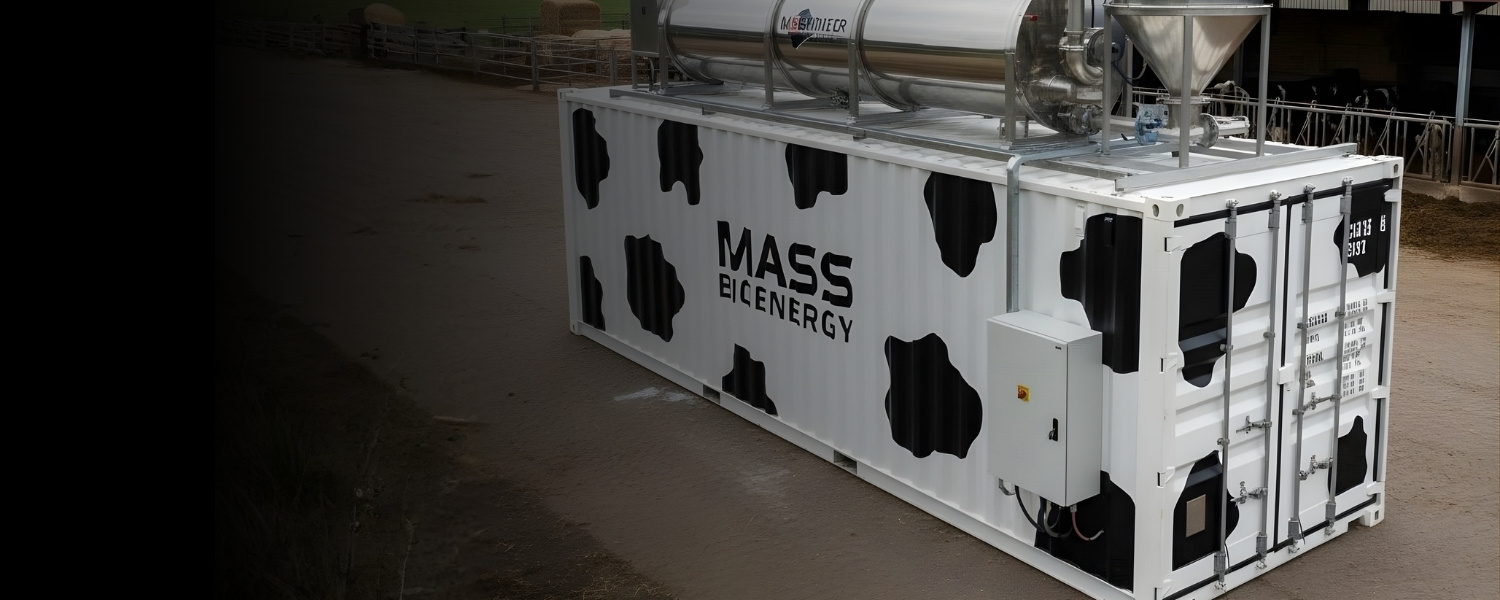
A solid–liquid separation step was implemented using a screw separator, and a stationary in-vessel compost reactor was installed for the solid fraction. The material—mixed with feed residues and plant waste in a mixing tank—was fed into the reactor. Temperature and retention-time data were monitored to ensure pathogen control and bedding quality.
Results:
- Odor problems on the farm were significantly reduced
- The use of chemical fertilizers on fields decreased by up to 40%
- The hygienic compost/bedding produced improved animal welfare and enhanced the farm’s scores in environmental inspections and overall brand reputation
Case Study 2
Vineyard + Dairy Farm Combined Scenario
A winery with vineyards adjacent to a dairy farm faced two issues:
- Pruning residues from the vineyards were burned or transported off-site each year
- Cattle manure and bedding from the dairy farm posed a separate waste management burden
The winery was purchasing high-quality compost from external suppliers but still could not achieve the desired soil improvement.
Solution:
A 40’ container-type bioreactor was installed in a shared area between the vineyard and the dairy farm.
- Vineyard pruning residues were shredded and used as the carbon source
- Dairy manure served as the nitrogen source, combined in a mixing tank and fed into the reactor
Results:
- The need for externally sourced compost in the vineyards was greatly reduced
- Soil organic matter and water-holding capacity increased, directly improving grape quality
- The winery used the story of “vineyards nourished with compost made from our own waste” in its marketing communications, strengthening both its premium-quality image and its environmental brand identity