
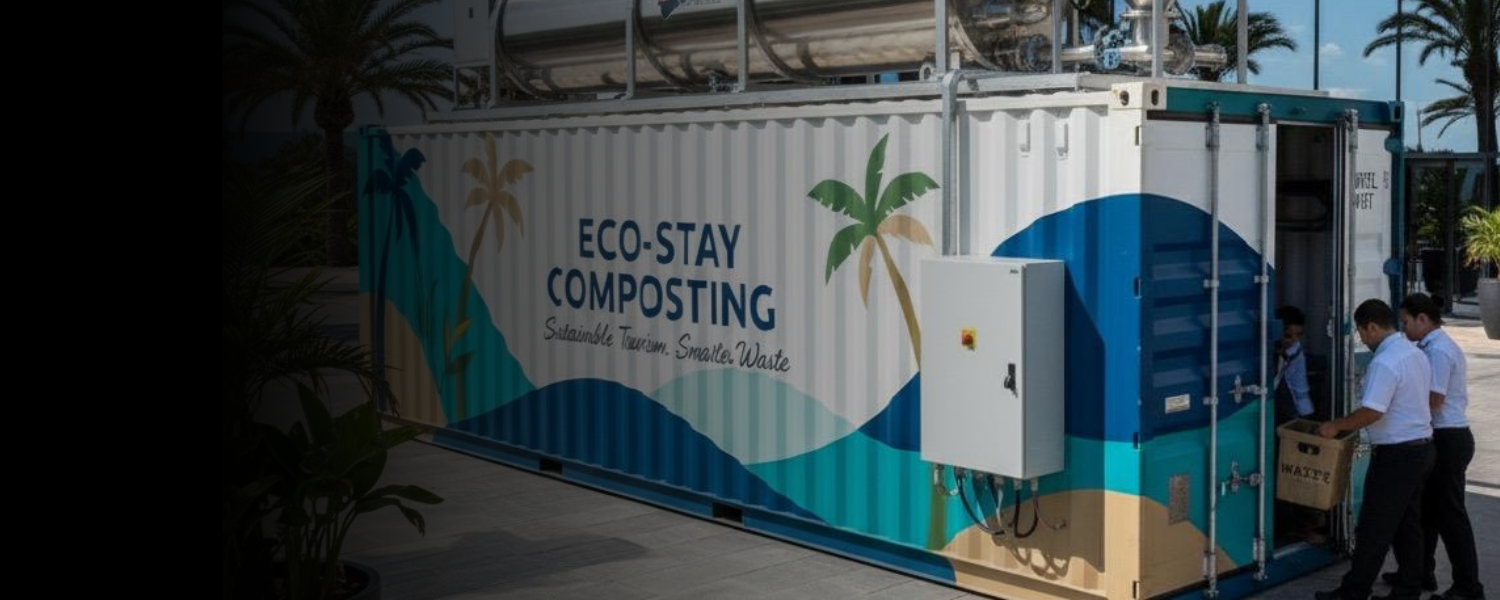
Hotels and Resorts
Hotels primarily generate kitchen and buffet waste, staff cafeteria waste, and landscaping/grass clippings. These waste streams are typically high in moisture, food-based, and irregular in flow.
Implementation Notes
1
Container-type systems are placed in the hotel service area or back-of-house locations.
2
Kitchen and buffet waste is fed into the reactor after necessary pre-shredding and short-term storage.
3
The resulting compost can be used in landscaping, gardens, and general outdoor maintenance.
4
Provides reduced waste disposal costs and measurable improvements in environmental performance reports.
Case Study 1
Kitchen Waste Management in a 200-Room Beach Resort
A 200-room holiday resort on the Mediterranean coast was generating approximately 1.2 tons of organic waste per day from its open buffet and snack bars. The containers stored in the back garden caused odor issues in the summer heat, attracted flies, and required special paid disposal three times per week. Additionally, the hotel spent a significant amount each year on purchasing peat and externally sourced compost for landscaping.
Solution:
A 20’ container-type in-vessel composting system was installed next to the service area. Kitchen and buffet waste—mixed with small amounts of lawn clippings and pruning residues—was fed into the reactor daily. The entire process was managed through a closed reactor and biofilter, keeping all odors under control.
Results:
- 35% reduction in waste disposal costs
- 60% decrease in the need for externally sourced compost for landscaping
- The hotel incorporated its “on-site compost production” story into its sustainability report, gaining extra points and prestige from eco-focused tour operators
Case Study 2
Limited Space, High Prestige in a City Hotel
A 150-room chain hotel operating as a conference property in a major metropolitan area was storing kitchen waste in a narrow space behind the building. Waste was transported to the landfill several times a week. Due to the limited area, odor, visual pollution, and complaints from neighboring buildings had increased significantly.
Solution:
A compact 20’ container-based composting unit was installed by clearing space in the rear service corridor of the hotel. Daily kitchen and staff cafeteria waste was shredded and fed into the reactor. A portion of the compost produced was used in the terrace planters and in the landscaping at the hotel entrance.
Results:
- Complaints related to odor were completely eliminated
- The hotel gained a strong social media presence as “the city hotel that produces its own compost”
- Highlighting this project as a sustainability example in presentations to corporate clients contributed indirectly to higher occupancy rates and increased brand prestige