Mılıtary Bases and Dısaster Zones
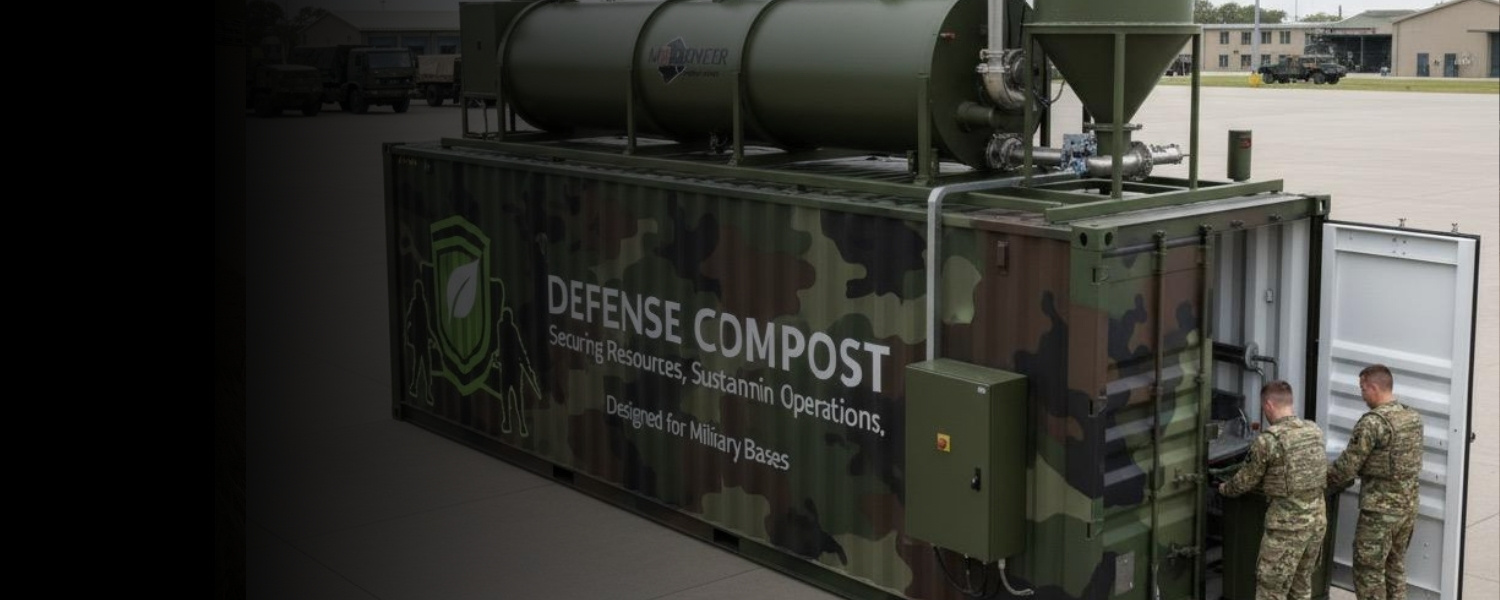
In military bases and temporary forward operating locations, organic waste typically includes personnel dining waste, unpackaged food stocks, landscaping residues, and, in certain zones, limited animal-derived waste. Logistics costs and on-site waste management constraints are significant operational factors.
Implementation Notes
1
Containerized systems can be relocated to different bases or reassigned after missions thanks to their portable design.
2
Integration with existing energy infrastructure, generators, or hybrid power systems is possible.
3
When waste quantities fluctuate, reactors can be operated in semi-batch mode.
4
The resulting compost can be used for on-base landscaping or for soil improvement in suitable designated areas.
Case Study 1
Reducing Logistics Costs in a Remote Military Base
A remote military base had to transport dining waste and landscaping residues to a disposal facility located hundreds of kilometers away several times a week. Fuel costs and vehicle deployment were both expensive and operationally risky.
Solution:
A 40’ container-type in-vessel composting unit was installed inside the base. Dining hall waste, unpackaged spoiled food stocks, and landscaping residues were composted in the reactor. The system was integrated into the existing generator infrastructure and supported by a hybrid solar system when required.
Results:
- Waste transport trips were reduced by 70%
- The compost produced was used for erosion control and reforestation around the base
- The base command presented this project as a “field circular economy” best practice in NATO and international reports, earning institutional recognition
Case Study 2
Waste Management in a Post-Disaster Temporary Settlement
In a temporary shelter area established after a major earthquake, thousands of people were being served daily meals. Organic waste accumulated rapidly, causing odor, flies, and hygiene issues. Regular waste collection services were difficult and costly to provide in the region.
Solution:
A mobile containerized composting system was deployed to the disaster zone. Positioned next to the field kitchen, the 20’ container operated with generator power and additional solar panels when needed. Dining waste was shredded daily and fed into the reactor, while odors were controlled through a biofilter.
Results:
- Odor and pest issues related to organic waste decreased significantly across the camp
- On-site treatment simplified waste transport logistics
- For disaster management authorities, the system became a documented “good practice example that safeguards human health and the environment simultaneously”