
Munıcıpalıtıes, Unıversıtıes, and Campuses
In municipalities, organic waste is generated at marketplaces, parks and gardens, and large-scale catering facilities; on university campuses, dining halls, cafeterias, and landscaping areas are the primary sources. Processing these wastes close to their point of origin significantly reduces transport and disposal costs.
Implementation Notes
1
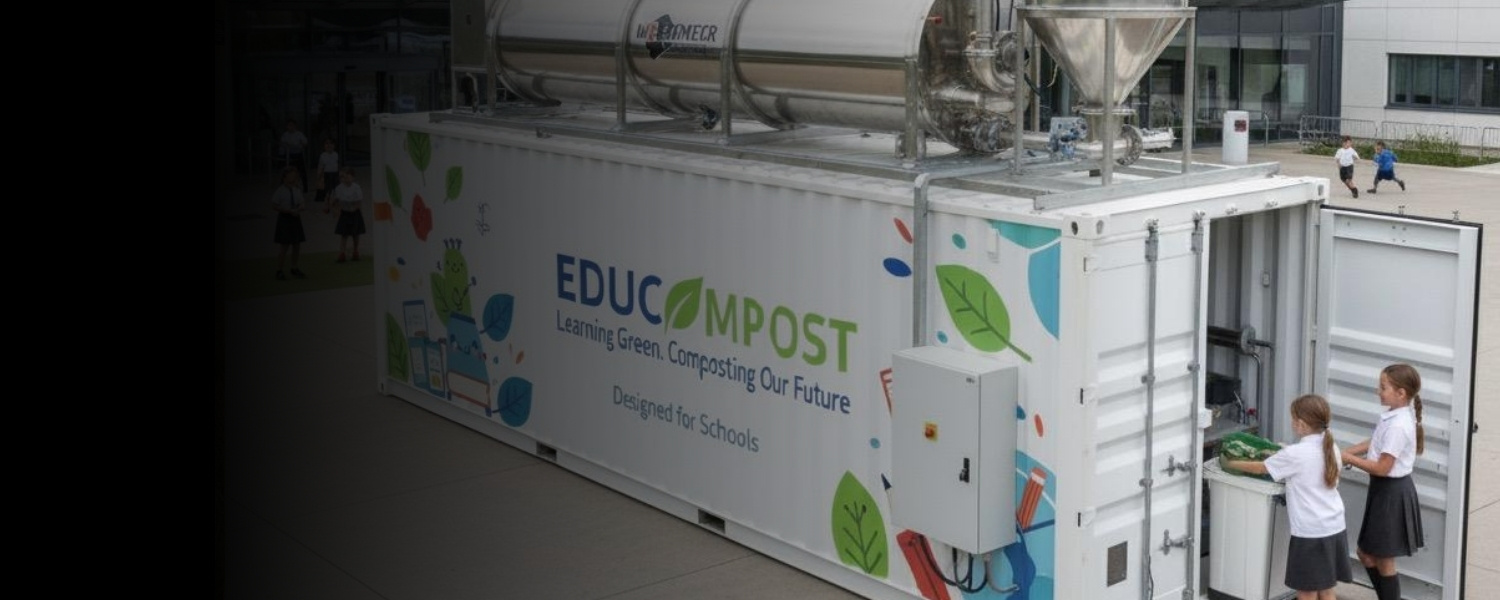
For small and medium-scale projects, containerized systems are suitable.
2
For higher-capacity applications, stationary in-vessel reactors or combinations of multiple containers may be used.
3
The resulting compost can be applied in park and garden maintenance, roadside tree planting, and on-campus landscaping areas.
4
The implementation can serve as a measurable indicator in the sustainability reports of the municipality or institution.
Case Study 1
Marketplace Waste Combined with Sewage Sludge
In a municipality with a large weekly marketplace, tons of fruit and vegetable waste were generated. Additionally, the municipal wastewater treatment plant produced dewatered sludge with high organic load. Both marketplace waste and sludge caused significant odor issues and frequent complaints due to increased truck traffic.
Solution:
A stationary in-vessel composting system was installed next to the wastewater treatment plant. Marketplace organic waste was collected separately and delivered to the facility; the material was mixed with dewatered sludge at defined ratios and fed into the reactor. The process was fully enclosed, and exhaust air was treated through a biofilter.
Results:
- A single integrated solution was created for both marketplace waste and sewage sludge
- Odor complaints from nearby residents decreased significantly
- The compost produced was used in municipal parks and gardens, and the municipality highlighted this project as a “circular economy example” in its sustainability report
Case Study 2
Student-Engaged Composting on a University Campus
A large university campus was generating substantial organic waste from dining halls, cafeterias, and landscaping. Waste was handled through the standard collection chain, offering no tangible sustainability experience for students.
Solution:
A 20’ containerized composting unit was installed at a central point on the campus.
The system processed:
- Dining hall waste
- Food residues from student club events
- Landscaping waste
Engineering and environmental science students monitored temperature and process data via the SCADA interface and conducted project-based analyses.
Results:
- A significant portion of the campus’s organic waste was processed on-site
- The compost produced was used in campus landscaping; the message “our campus produces its own compost” gained strong student support
- The university used this project in both academic and corporate communications, reinforcing its innovative and environmentally responsible campus image